Our Lessons
LEARNING HOW TO
MEASURE
Students put their engineering and measurement skills to the test by building towers out of blocks and using rulers to measure their height. They practiced reading measurements and comparing heights.


SINK OR
SWIM
Students used their prior knowledge to predict which objects would sink or float. By testing their predictions, they discovered how an object's properties, including its mass and volume, determine its density.


Wind &
Aerodynamics
Students designed and folded their own paper airplanes to explore the science of flight. They observed how different folding techniques affected each airplane's flight path and how far it can travel.


Anatomy
Jeopardy
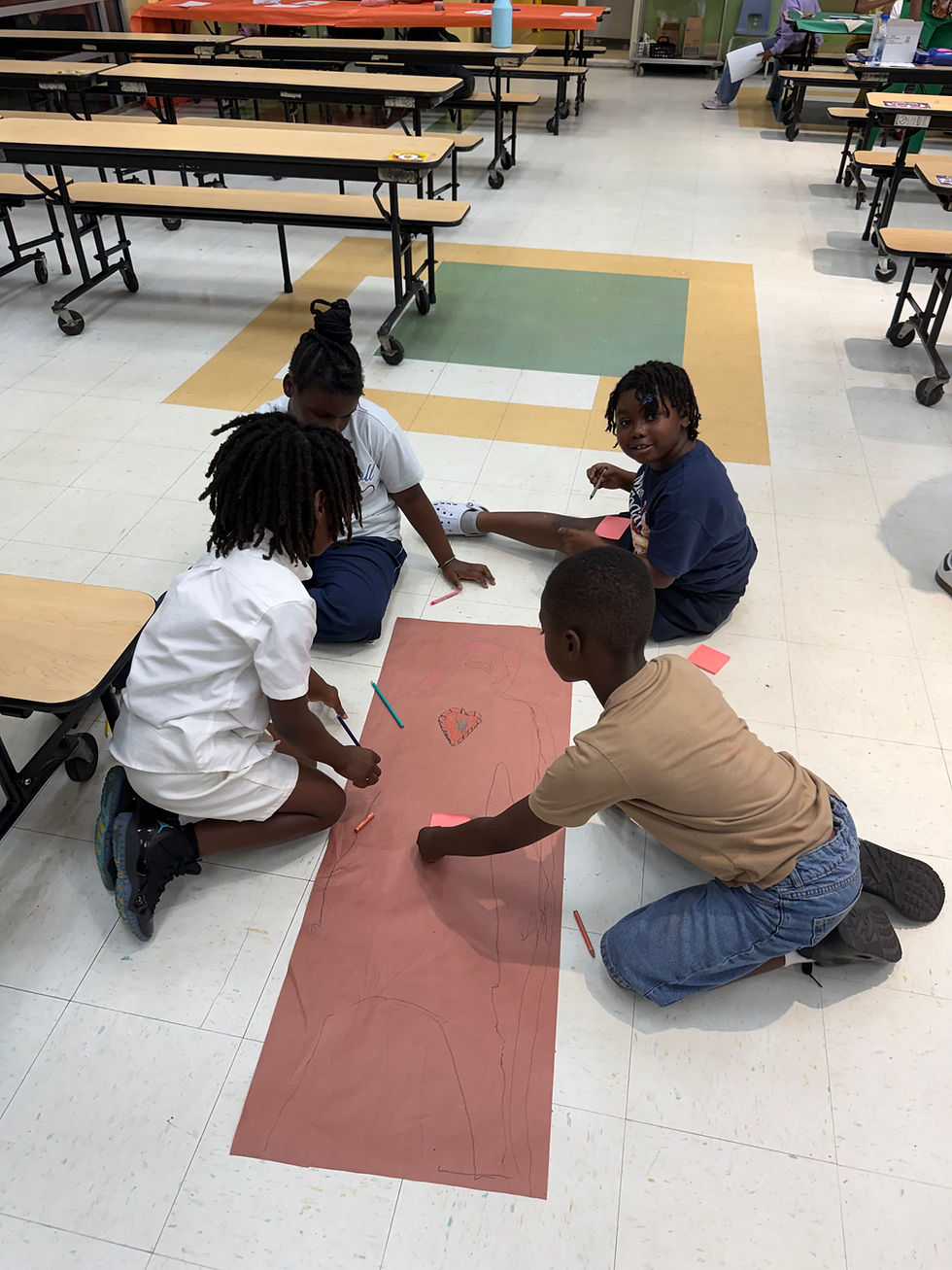
Students explored the different parts of the human body through an interactive game of Jeopardy. They then split into smaller teams, traced their teammates' outlines, and drew and labeled the body parts they had learned about.


Density
Tower
Students predicted how different liquids would layer based on their densities. They then used their knowledge to hypothesize which layer various objects would settle in, putting their understanding of density to the test.


Magic
Milk
This experiment uses everyday ingredients to demonstrate concepts like surface tension and molecular bonds. When the soap touches the milk and the colors erupt, helping students visualize a chemical reaction.


Elephant
Toothpaste
The Elephant Toothpaste experiment is a safe, exciting activity for kids that demonstrates a fast chemical reaction by mixing hydrogen peroxide, dish soap, and a yeast catalyst. The experiment teaches kids foundational chemistry and scientific concepts through a dramatic, hands on visual demonstration.


Marshmallow
Building
A marshmallow and toothpick building lesson teaches engineering, geometry, skills, and problem-solving through hands on construction. The activity guides kids through plan, build, test, and improve. When a tower falls over, they have to analyze why it failed and redesign it.


Building Paper
Towers
This challenge teaches kids basic engineering by tasking them to build the tallest free standing structure using only paper and tape. Kids see how flat paper bends easily, but transforming it into triangular/rectangular prisms makes a flimsy material rigid and strong.


Is It a Solid or a
Liquid?
Students explored the properties of Oobleck, a substance that acts as both a liquid and a solid depending on how force is applied. Through experimentation, they discovered how Oobleck responds differently to pressure, movement, and touch, learning while having fun getting messy with science.


Friction and Static
Electricity
Through this experiment, students learned how friction creates static electricity and how electric charges can attract objects. Students rubbed balloons against their hair to create an electric charge. They then held the balloons near their paper ghosts and watched as the ghosts lifted and stuck to the balloons.


Magnetic
Mazes
Students designed their own mazes and used magnets to guide paperclips through the paths without touching them directly.
By moving a magnet underneath the paper, they discovered how magnetic forces can act through certain materials and move objects from a distance.


